
*NOTE: This post was written while listening to the soundtracks of the National Treasure films. Be warned that examples of inane, US History-centered conspiracy theories will make up the gist of this post. Please enjoy the little tidbit above. These obviously can't all be random coincidences...something's obviously going on.*
*SIDENOTE: While this post is somewhat inspired by the National Treasure films, there will be no Disney special effects. There may be a hyperlink at some point. That's the closest I get. Also, there will be no Nicholas Cage. Sorry for getting your hopes up.*
Anyways...there's a lot which we supposedly know about Lee Harvey Oswald. Dude shot and killed JFK, ran away, got arrested and was shot and killed by Jack Ruby before there was a trial. With the lone gunman dead, all traces back towards a cause/motive are eliminated, and we know little to nothing about what transpired with the assassination, and why it happened. In fact, most people don't know a whole lot about Oswald, prior to that fateful November day in Dallas. Heck, I've read a lot on the JFK assassination and the various conspiracies and what not, but I knew little to nothing of his prior life before I read Libra, by Don DeLillo.
DeLillo constructs a unique, creative narrative in which Oswald is merely a pawn in an extremely complex plot by two former CIA operatives, who aim to cause a war between Cuba and the US following the failed Bay of Pigs invasion, by creating an intentional near-assassination attempt to be pinned on the Cuban intelligence agency. Additionally, in the course of word breaking on the attempt, the operatives hope that the CIA's role in attempted assassination attempts on Fidel Castro enter public knowledge, helping discredit the agency. It's an incredibly complex plot, with new elements and characters being introduced in seemingly every chapter.
So far, we're not sure how Oswald factors in exactly to their plot...the CIA knows of Oswald, and thinks he may be potentially useful, based on his Communist digressions (Oswald defected to Russia, before coming back to the US), and experience in the military (though his shooting records are less than clear, with both great and poor marks coming up, along with an incident where he "shot himself in the left arm with a sidearm" (DeLillo, 92) ). However, as the operatives want to pin the assassination on the Cubans, I'm unsure about how they plan on fitting Oswald into that role, since having Communist leanings doesn't seem like a strong enough case.
Anyways, the point I'm making is that DeLillo crafts a uniquely deep portrait of Oswald, more three-dimensional than many of the narratives, photos and videos that we see of him, or based on him. DeLillo goes back through time, piecing together facts from Oswald's tough childhood, growing up with numerous fathers through various marriages, but never really having a father figure he can look up to, through his troubled military service and into the assassination. Sometimes, I've stopped and hesitated while reading, and a Google search or two proves that a seemingly minor detail in the narrative is indeed factual. This contrasts with the other postmodern novels we've read, where the authors constructed a shell of fact which they built off of to create their fictional narrative. Rather, DeLillo creates a web of interweaving facts (with regards to Oswald, that is...for all we know, DeLilllo's JFK conspiracy narrative is completely fictional...or is it? We'll see in 2017 when pretty much the rest of the documents regarding the assassination are released.), and then adds fiction into these facts, creating a narrative that seems to be fictional, despite the fact that DeLillo's central character, Oswald, is based so heavily in fact.
Despite the fact that we're already 150 pages into the novel, I think we've just dipped our toes into the conspiratorial waters of this novel, and I'm loving it. As an avid history enthusiast (especially of the presidents), I love reading JFK conspiracy theories, and this is one that stands alone from all others, suggesting that the CIA unintentionally killed him. I can't wait to see what DeLillo does in the rest of the novel, and the plot will undoubtedly become even more complex before we're able to completely comprehend it, if we're ever able to.
MJ, over and out.
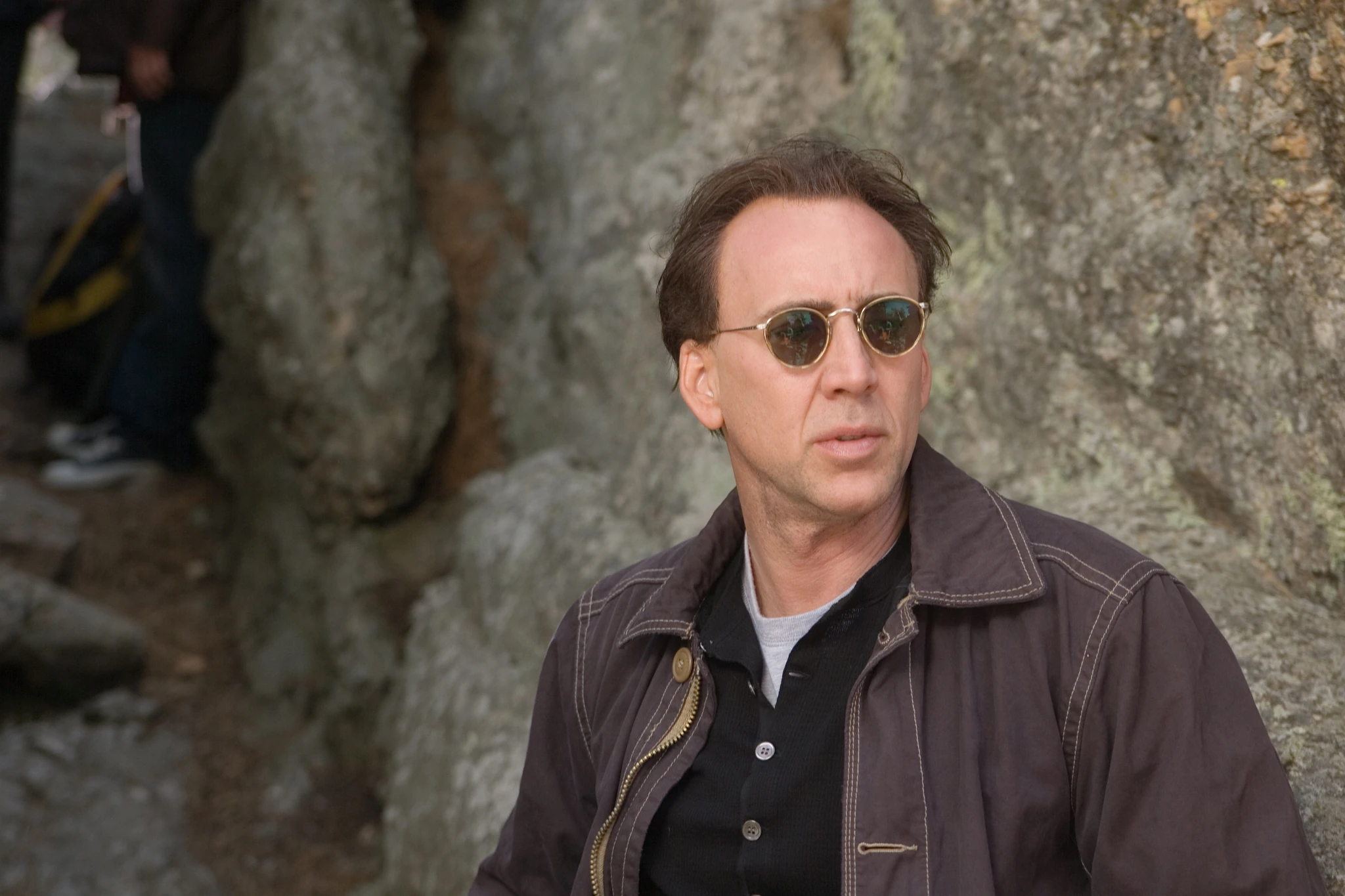
Surprise, Nicholas Cage does show up!
MJ, over and out. For real this time.
EDIT: Somebody pointed out that the original conspiracy image was a meme. There are many correlations, but that one is only partially true. Some are BS. Use your better judgement. I was duped!
A better version...


Definitely enjoying the conspiracy theory that Delilo is creating. Although in terms of conspiracy theories, Delilo's is pretty tame compared some others you can find. I feel that Delilo is taking a bunch of conspiracies and trying to tie them together in the most logical way possible. Delilo is basically trying to make the most likely conspiracy theory possible and he's doing a great job of it. So far I'm definitely enjoying Libra and the plot the two ex-Company men are weaving. I already kind of know how the book is going to end, but watching the plot reach its climax is going to be interesting.
ReplyDeleteIt's important to keep in mind that in DeLillo's "plot plot," the plotters are "CIA," but this is NOT an authorized CIA operation. Everett is still in the Agency, but shunted to a marginal position at Texas Women's University, certainly not authorized to be doing this kind of extracurricular work. Parmenter still is doing higher-level work with the Agency, but this particular plot is "off the books." The rest of the plotters may have done freelance-type work for the CIA before (Mackey), but most are independent (Raymo, Vazquez, Wayne Elko, etc.).
ReplyDeleteSo "the CIA" is *sort of* plotting to (near-miss) assassinate the president, but *officially* the Agency has no knowledge of the plot. (So DeLillo manages to have it both ways--the CIA both did AND didn't try to assassinate the president!)
I think one of the "coincidences" listed in the Kennedy vs. Lincoln comparison is -- unfortunately -- not necessarily a total coincidence. The fact that both presidents were particularly concerned with civil rights isn't so odd. I'm not saying that each assassin was motivated entirely by feelings of hatred and intolerance (I mean, who knows what was really going on in Lee's head), but it's an unfortunate truth that civil rights leaders (MLK too) tend to attract that kind of violence. Just something to note. As for all the other coincidences, they're completely creepy and I have no clue what to think.
ReplyDeleteLooking back at your conspiracy images now, the comparisons listed bear a striking resemblance to those that Lee uses to point out things that he and Kennedy have in common. The fact that some of the things that Lee is thinking of really wouldn't look too out of place on the intentionally over-the-top first image sort of shows just how far he's reaching to draw connections and make himself feel important; connected to Kennedy by fate.
ReplyDeleteHistory has power...
ReplyDelete(Nice title, by the way.)